
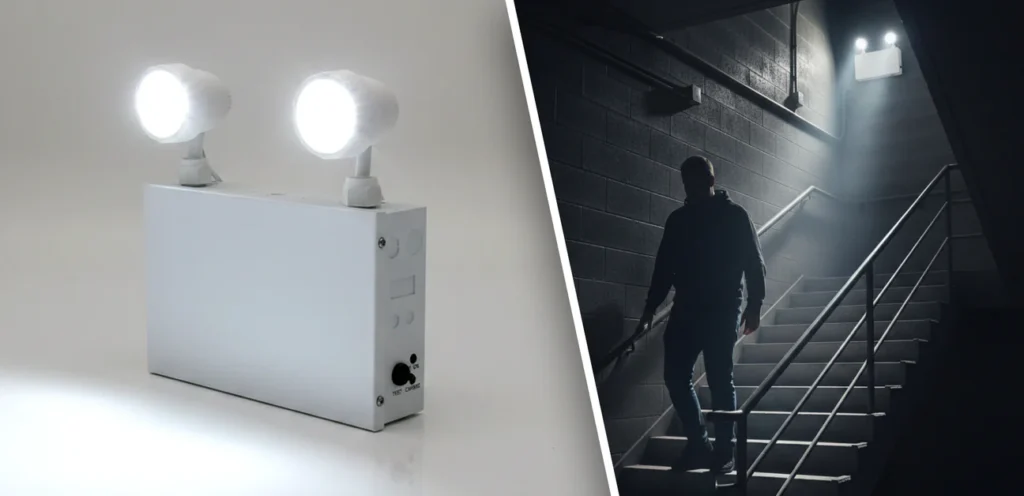
Fire Services · Emergency Lighting
Emergency lighting & exit sign service
Annual 30-minute duration testing with photometric verification — not just function-checks. Fixed-fee annual contracts.
Commercial emergency lighting and exit signs in Ontario need a monthly 30-second functional test plus an annual 30-minute duration test under the Ontario Fire Code and the Life Safety Code. CAINtech performs the full cycle in commercial buildings across the GTA: battery testing, photometric verification, exit sign confirmation, replacement of failed units, and documented reporting. Fixed-fee annual contracts available.
10 lux
Minimum illumination
30 min
Duration test
Monthly
Staff functional test
Annual
Tech 30-min test
Annual Cycle
Upgrades & Installation
What is included in emergency lighting and exit sign service?
The Ontario Fire Code requires emergency lighting and exit signs to operate automatically when normal power fails, providing at least 10 lux along exit routes for the duration required by occupancy classification. Annual service covers:
How often must emergency lighting be tested in Ontario?
The Ontario Fire Code requires a monthly 30-second functional test performed by building staff, which simulates a power failure and confirms the unit illuminates, and an annual 30-minute duration test performed by a qualified technician, which simulates a sustained power failure and confirms the unit provides illumination for the full required duration. Units that fail the duration test get battery or full-unit replacement.
Which standards apply?
Self-contained emergency lighting units shall be inspected at intervals not greater than 12 months to ensure that they operate when the regular power supply fails and provide the required illumination for the specified duration.
Ontario Fire Code, Article 2.7.3.4
The Ontario Fire Code (O. Reg. 213/07) defines the testing requirements. The Ontario Building Code defines installation and design requirements. The Life Safety Code is referenced for performance standards, including the 10 lux minimum and the 30-minute minimum duration for most occupancies. CSA C22.2 standards apply to specific emergency lighting equipment.
Key compliance requirements: 10 lux minimum illumination along exit routes (Life Safety Code), 30-minute minimum duration for most occupancies (Ontario Building Code), OFC Article 2.7.3.4 annual duration testing.
Where is emergency lighting required?
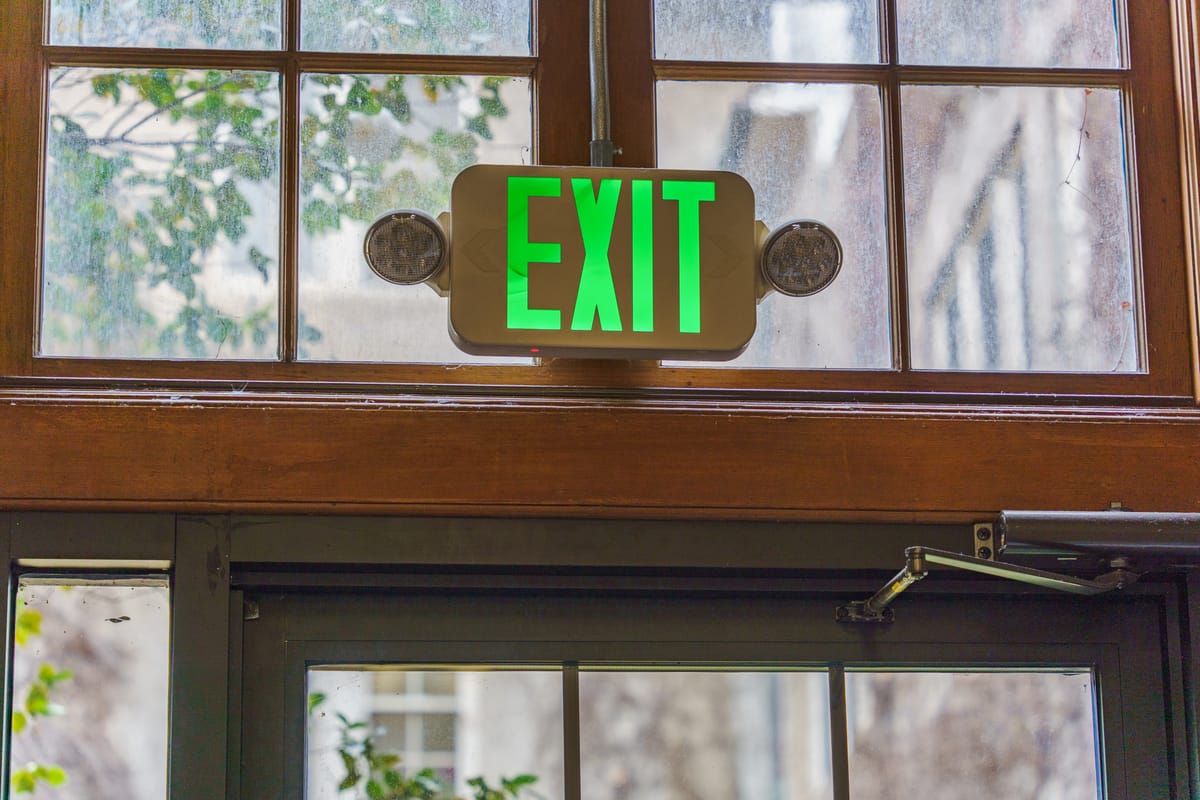
Under the Ontario Building Code and Ontario Fire Code, emergency lighting is required in all exits and corridors leading to exits, stairways used as exits, open floor areas where employees congregate, underground walkways and tunnels, principal routes leading to exits, service rooms, storage rooms in industrial occupancies, public assembly occupancies, and multi-occupancy corridors in residential buildings. Exit signs are required at every exit, every change of direction along an exit route, and any point where an occupant could become confused about the path to safety.
How does CAINtech handle deficiencies?
Critical deficiencies include a unit that does not activate at all on power loss, a unit that fails well before 30 minutes elapse, or an exit sign that does not illuminate. These typically result in battery or unit replacement on the same visit or shortly after. Non-critical deficiencies such as cosmetic issues or units due for preventive replacement are logged and scheduled. Multi-unit failures sometimes point to a deeper issue such as corroded wiring or an undersized circuit, which we flag for further investigation.
Why CAINtech
We verify the lux, not just the light
Frequently asked questions
How often must commercial emergency lighting be tested in Ontario?+
Who can perform the monthly emergency lighting test?+
What is the minimum illumination level required?+
What is the minimum duration required?+
My emergency lighting unit failed the 30-minute test. What now?+
Do exit signs need to be tested?+
Are LED emergency lighting units lower-maintenance than older units?+
Does emergency lighting service need to happen during business hours?+

Get your emergency lighting quote
Send us your approximate unit count and building size. Fixed-fee annual quote back the same business day. Mon to Fri, 7:00 AM to 3:30 PM.