

Fire Solutions · New installations · For contractors
Fire Alarm Design, Supply & Commissioning for Contractors
CAINtech partners with electrical contractors and GCs on new Siemens Cerberus PRO fire alarm installations across the GTA. We handle design, shop drawings, hardware supply, programming, commissioning, and verification coordination — your crew runs the wire, and your fire alarm number gets sharper.
On most commercial projects, the electrical contractor owns the fire alarm scope — but not the specialty layer inside it. CAINtech is a Siemens Solution Partner and authorized Cerberus PRO distributor that fills exactly that gap: we design the system to CAN/ULC-S524, produce the shop drawings and calculations, supply hardware direct from Siemens, program and commission the panel, and coordinate independent CAN/ULC-S537 verification — while your electricians run the wire and mount the devices.
Direct
Siemens hardware supply
S524
Design & installation standard
S537
Verification coordinated
CFAA
Certified technicians
What we take off your plate
One fire alarm partner behind your bid
Design & shop drawings
System layout to CAN/ULC-S524, CAD shop drawings, battery and voltage-drop calculations, and complete submittal packages — turned around to meet your construction schedule.
Hardware supply
Cerberus PRO panels and devices as an authorized distributor — local stock plus direct-from-Siemens ordering for less common components, protecting your lead times and your schedule.
Programming & commissioning
Device addressing, panel programming, and commissioning by CFAA-certified technicians. Cerberus PRO auto-configuration and bench pre-addressing shorten the trim-out phase for your crew.
Verification & closeout
We prepare the system for CAN/ULC-S537 verification, coordinate the independent verifier, and hand over AHJ-ready closeout documentation — so occupancy isn’t waiting on the fire alarm.
Why Cerberus PRO
The system itself cuts installation labour
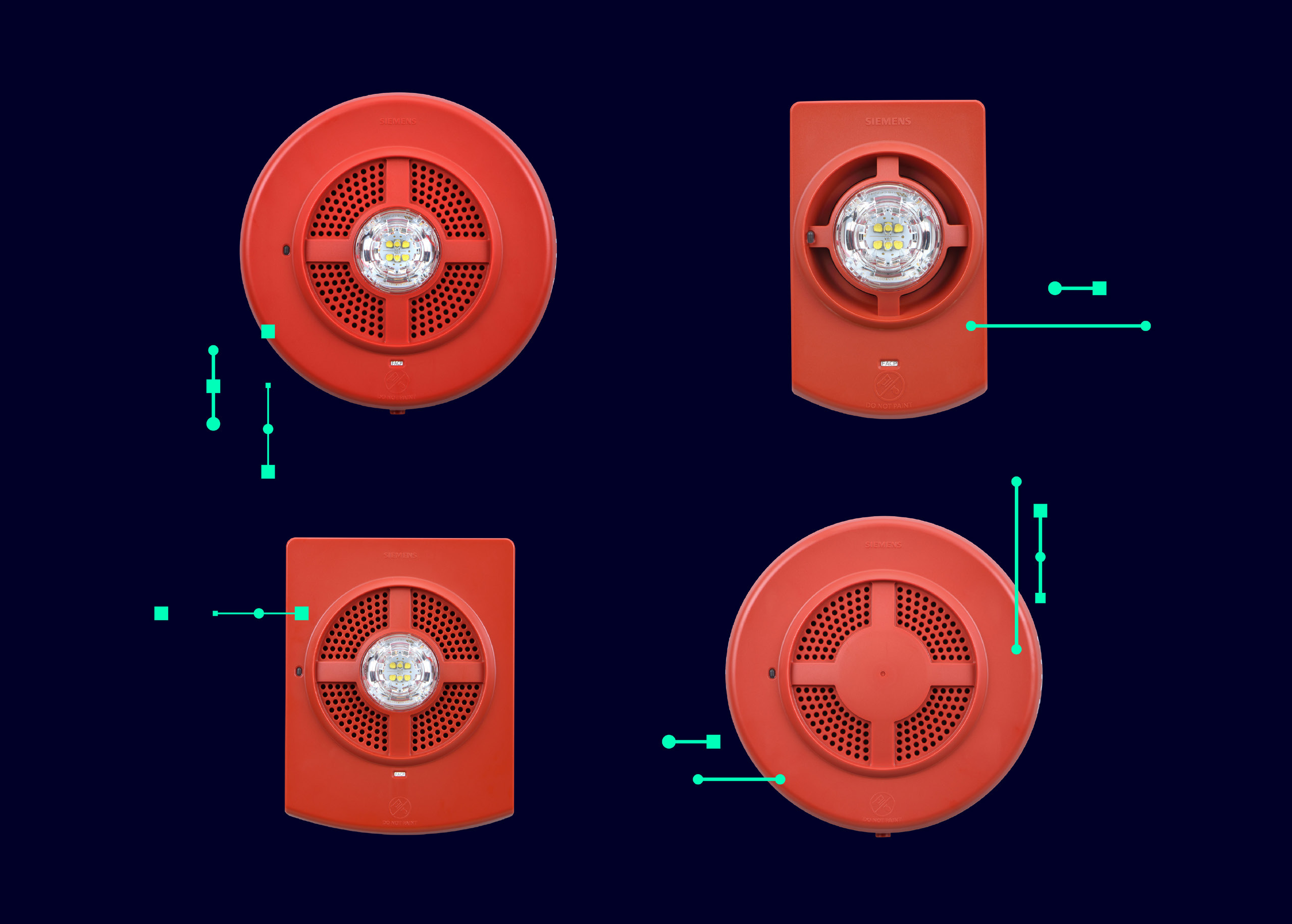
Siemens builds short-circuit isolation directly into Cerberus PRO devices — ISOtechnology, standard and at no extra cost. Competing systems need separate isolator modules designed, purchased, mounted, and wired on every loop. On a Cerberus PRO job, those modules — and their backboxes, conduit stubs, terminations, and addressing — simply aren’t on the bill of materials.
Value engineering: same compliance, lower installed cost
On a fire alarm installation, wire, conduit, and installation labour — not the panel — are usually the largest cost drivers. Those quantities are fixed by design decisions made before the first wire is pulled. That’s where we work: send us the spec’d fire alarm design with your tender, and we’ll return a priced, code-compliant alternative wherever we can find real savings.
What does a CAINtech value-engineering review look for?
- Right-sized panel tier — matched to the actual point count plus realistic growth, not the largest panel in the spec. The Cerberus PRO range scales from compact panels to networked Modular systems, so you pay for the capacity the building needs.
- Circuit and loop routing that cuts home runs — addressable loop layout planned around the building, reducing wire footage and conduit compared to circuit-heavy designs.
- Built-in isolation instead of discrete isolator modules — ISOtechnology removes isolator devices, backboxes, and their installation labour from the bill of materials entirely.
- Listed equivalent substitutions — where the spec allows an “or equal,” we propose Siemens equivalents through the consultant properly, with the documentation to back the substitution.
- Wiring reuse on retrofits — existing field wiring that passes testing (insulation resistance, continuity, loop limits) can often be reused; cabling is a large share of the original installation cost, and wiring that passes stays. Replacing an end-of-life system? See fire alarm upgrade & migration.
Every proposal stays inside CAN/ULC-S524 and the consulting engineer’s design intent. Value engineering is compliant cost optimization — never corner-cutting.
How it works
Frequently asked questions
Can CAINtech handle the fire alarm scope under our electrical contract?+
Do you provide shop drawings, battery calculations, and submittal packages?+
How does ISOtechnology actually reduce our installation cost?+
Who performs the CAN/ULC-S537 verification?+
Can existing wiring be reused on a retrofit or panel replacement?+
What happens after the building is occupied?+

Bidding a job with a fire alarm scope?
Send the drawings and spec. We will provide you with a detailed quote — and wherever we see real savings, a priced value-engineering proposal alongside it.