
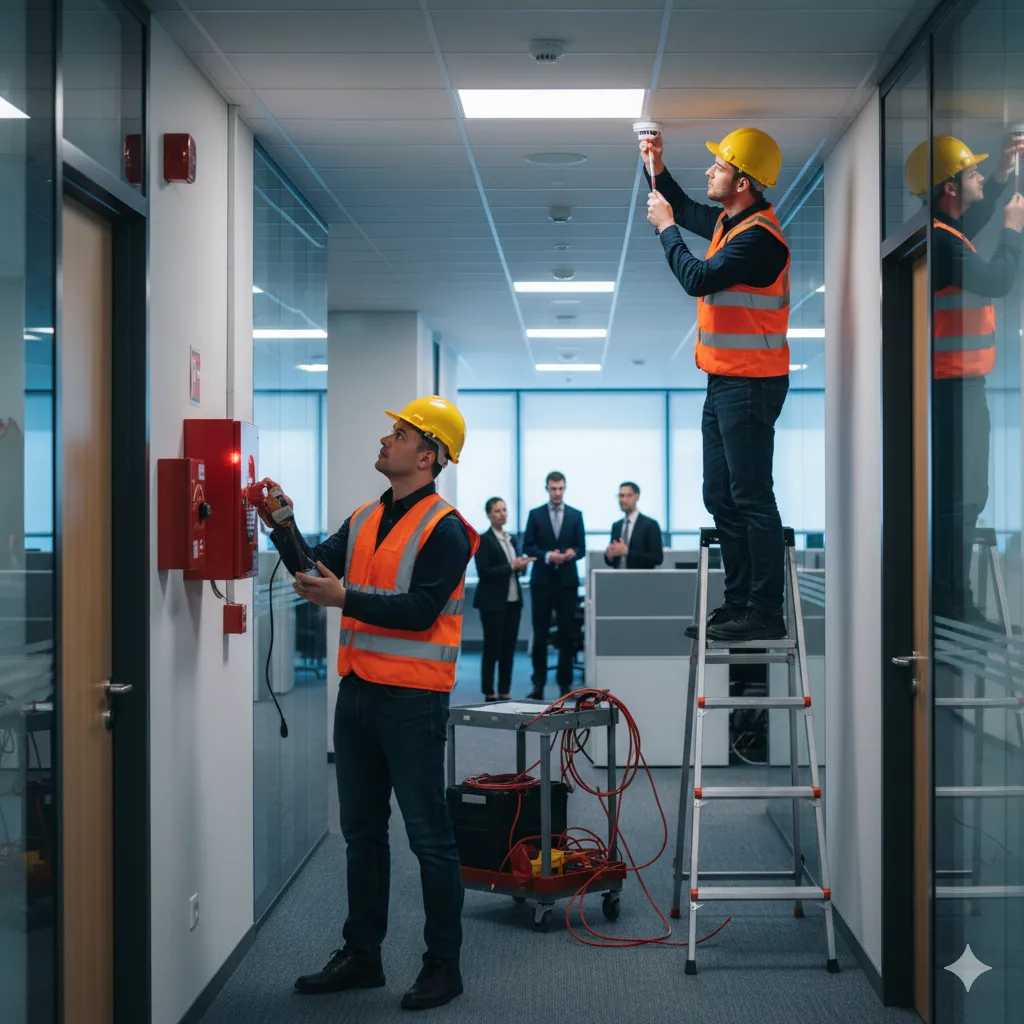
Fire Services · Fire Alarms

Fire alarm inspection & testing across the GTA

CFAA-certified, CAN/ULC-S536:2019-compliant inspections with AHJ-ready reports. Fixed-fee annual contracts for commercial buildings.

Commercial fire alarm systems in Ontario need annual inspection by a CFAA-certified technician under CAN/ULC-S536:2019, plus monthly checks by building staff. The standard is mandatory as of January 1, 2026, under O. Reg. 87/25. CAINtech’s CFAA-certified team performs full system testing, deficiency tracking, monitoring station verification, and AHJ-ready report submission for commercial buildings across the GTA. Fixed-fee annual contracts available. 24/7 emergency line for fire alarm faults.

S536

CAN/ULC standard

100%

Device testing

Annual

Inspection cycle

24/7

Emergency response

Inspection, Testing & Maintenance

CAN/ULC-S536:2019 annual inspection — 100% device testing, no sampling
Pre-test coordination with the building manager and monitoring station
Notification appliance dB and visual verification at occupant locations
Interface testing (waterflow, tamper, HVAC shutdown, elevator recall)
Battery and secondary power capacity/load testing
Deficiency log with critical / non-critical classification
AHJ-format reporting in CAN/ULC-S536:2019 layout

NEW & Retrofit Installation

Factory Authorised for Siemens Cerberus PRO Fire Alarm Systems panel installation, programming and testing.
CAN/ULC-S537:2019 verification testing on new + modified systems
Legacy panel upgrades (Mircom, Notifier, Edwards, Fire-Lite)
Addressable system retrofits
Voice evacuation system installation
Interface device installation (HVAC shutdown, elevator recall)
Monitoring station setup + ULC-S561 transmission verification

What is included in a commercial fire alarm inspection?

An annual fire alarm inspection under CAN/ULC-S536:2019 covers every device on the system, plus the monitoring station, plus the documentation that goes to your AHJ:

01
Control panel verificationStatus check, trouble signal review, battery test, voltage and current readings, software version confirmation.
02
100% device testingEvery smoke detector, heat detector, manual pull station, supervisory device, monitoring module, and notification appliance is individually tested. CAN/ULC-S536:2019 does not allow sampling.
03
Notification appliance verificationAudible signal levels confirmed with dB readings at occupant locations, visual signal verification on strobes, and voice evacuation intelligibility checks where applicable.
04
Monitoring station signal verificationWhere the system is monitored by a ULC-listed station, signal transmission is confirmed for each zone or device class.
05
Interface device testingSprinkler waterflow switches, tamper switches, duct detectors, HVAC shutdown interfaces, and elevator recall, all tested for proper operation.
06
Battery testingSecondary power tested to verify capacity meets system load for the required duration.
07
Deficiency documentation and AHJ-format reportingEvery issue photographed, classified by severity, and entered into a tracked log; the report submits in the exact CAN/ULC-S536:2019 format your AHJ expects.

For a typical commercial office of 50 to 100 devices, this is a 4 to 6 hour visit. For a 30-storey condo with 1,500 or more devices, it is a 2 to 3 day engagement, often scheduled in phases to minimize tenant disruption.

How often must commercial fire alarm systems be inspected in Ontario?

The Ontario Fire Code defines a layered cycle. Daily, building staff confirm the fire alarm control unit is in normal status with no trouble lights. Monthly, building staff rotate through manual station tests, check audible and visual signals, review trouble signals, and inspect backup batteries. Annually, a CFAA-certified technician performs the full inspection with 100% device testing. System changes trigger a separate CAN/ULC-S537:2019 verification.

Mandatory date: Under O. Reg. 87/25, compliance with CAN/ULC-S536:2019 became mandatory on January 1, 2026. Older systems operating under earlier versions of the standard need to align with the current version.

Read: Ontario Fire Code 2026, what property managers need to know →

Which standards apply?

Fire alarm system inspection, testing, and maintenance shall be performed in accordance with this Standard and the manufacturer’s published instructions.

CAN/ULC-S536:2019, Section 1.1

  • CAN/ULC-S536:2019 is the inspection and testing standard. It defines what gets tested, how often, and what the report looks like.
  • CAN/ULC-S537:2019 is the verification standard for new installations and major modifications.
  • CAN/ULC-S524 is the installation standard, relevant for install or retrofit work.
  • CAN/ULC-S561 is the standard for ULC-listed monitoring stations.
  • NFPA 72, the National Fire Alarm and Signaling Code, is referenced for certain technical specifications.
  • Ontario Fire Code (O. Reg. 213/07, amended by O. Reg. 87/25) is the regulation that gives all of the above their legal force in Ontario.
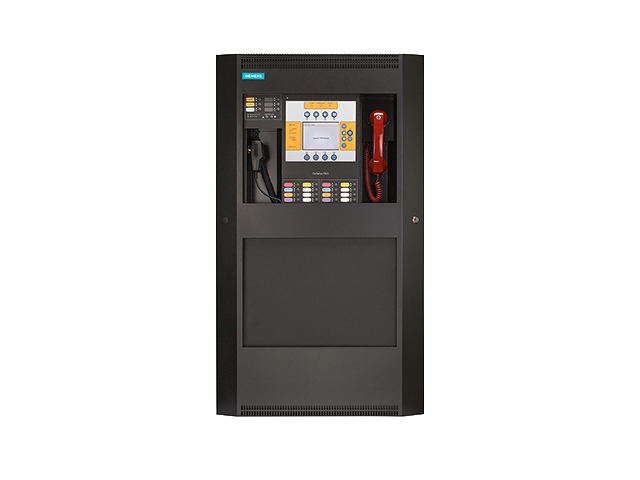
Siemens Cerberus PRO Modular fire alarm control panel

Who is qualified to inspect commercial fire alarms?

A technician holding current Canadian Fire Alarm Association (CFAA) certification recognized by the Authority Having Jurisdiction. CFAA is the credential AHJs across Ontario use as the competency benchmark for fire alarm inspection. CAINtech technicians are factory trained on Siemens Fire Alarm Systems, and have experience working on third-party systems like Simplex, Mircom, Notifier, Edwards (EST), and Fire-Lite, CAINtech technicians are trained on WHMIS,Working at Heights, and First Aid.

What does CAINtech do during a fire alarm inspection?

01
Pre-inspection notificationInspection date confirmed, tenants notified by building staff, AHJ notified where required.
02
Site arrival and pre-checkControl unit status reviewed, trouble signals checked, previous report and layout drawings reviewed.
03
System placed on test with the monitoring stationso signal verification does not trigger a fire department response.
04
Device testingEach device tested zone by zone, smoke detectors with calibrated aerosol, heat detectors with directed heat, manual stations actuated.
05
Notification appliance checkAudible levels measured, visual signal synchronization confirmed, voice evacuation intelligibility checked.
06
Interface testingWaterflow, tamper switches, HVAC shutdown, elevator recall, and fire department phones tested.
07
Battery and power testingBattery condition tested to verify supervisory capacity.
08
System taken off testand normal status restored.
09
Walk-through with building staffto discuss findings and flag immediate critical items.
10
Documentation and report generationin CAN/ULC-S536:2019 format with deficiency log and photo evidence.
11
AHJ submissionwhere required, with a copy to the property manager.

How does CAINtech handle deficiencies?

Critical deficiencies are life-safety risks such as an inoperable control unit, monitoring signals not transmitting, or a non-functional bank of notification appliances. These need immediate action; if repair cannot happen in time, the building needs a fire watch until the system is restored.

Non-critical deficiencies such as a single smoke detector that failed sensitivity testing are tracked, scheduled, and re-tested. Our annual report separates the two: critical items on page one with remediation timelines, non-critical items in a tracked log. For either category we provide a quote with a priority recommendation. Inspection service does not lock you into using us for the repair.

Why CAINtech

Reports built for how your AHJ actually files them

AHJ-ready reports in the exact CAN/ULC-S536:2019 format your jurisdiction expects.
Siemens Cerberus PRO continuity — we are the authorized Ontario distributor.
One accountable team across every fire system in your building.

Frequently asked questions

How often does the Ontario Fire Code require annual fire alarm inspection?+
Annually by a CFAA-certified technician under CAN/ULC-S536:2019, with monthly checks by building staff. Mandatory full compliance with CAN/ULC-S536:2019 began January 1, 2026, under O. Reg. 87/25.
What is the difference between inspection and verification?+
Inspection is annual testing of an existing system under CAN/ULC-S536:2019. Verification is a one-time test of a newly installed or substantially modified system under CAN/ULC-S537:2019. Verification happens before occupancy of a new building; inspection happens yearly thereafter.
How long is a fire alarm inspection report valid?+
Twelve months from the inspection date. The Ontario Fire Code requires reports to be kept on-site for at least two years and made available to the Chief Fire Official on request.
What happens if I miss an annual inspection?+
A missed annual inspection puts you out of compliance with O. Reg. 87/25, which can result in a fire code violation, insurance complications, and potential liability if a fire incident occurs. AHJs typically allow a remediation window once non-compliance is identified, but the cleanest path is staying on the annual cycle.
Can fire alarm inspection happen during business hours?+
Yes. Devices are activated only briefly during testing, tenants are notified in advance by building staff, and the monitoring station is placed on test mode so the fire department is not dispatched for test signals. After-hours scheduling is available where business-hours testing creates significant disruption.
Do you service systems from manufacturers other than Siemens?+
Yes. Our CFAA-certified technicians service the major commercial fire alarm platforms found in GTA buildings, including Mircom, Notifier, Edwards (EST), Fire-Lite, Honeywell, and Simplex. Only our Fire Solutions distribution arm is Siemens-exclusive.
Will tenants be disturbed by the inspection?+
Briefly. During notification appliance testing, audible signals activate for a few seconds at a time. Building staff typically post notices the day before. Total disruption is usually under 30 minutes spread across the visit.
Do you provide reports suitable for condo board meetings?+
Yes. The annual report includes an executive summary appropriate for condo board presentation, a deficiency log with severity classifications, photo documentation, technician credentials, and the formal CAN/ULC-S536:2019 inspection record.
Can you handle fire alarm inspections for buildings outside the GTA?+
Our standard service area covers the GTA and surrounding regions — Peel, Toronto, York, Durham, Halton, Hamilton, Dufferin, and south Simcoe (Barrie to Oshawa to Hamilton). For larger projects we travel further across Ontario.
What if my fire alarm system needs upgrading or replacement, not just inspection?+

We handle that too. Fire alarm installation and retrofit work falls under our Fire Solutions arm, and we are the authorized Siemens Cerberus PRO distributor for Ontario. We can quote new installation or retrofit work alongside the inspection.

Ready for your fire alarm quote?

Send us your device count, panel manufacturer, and address. Fixed-fee annual quote back the same business day. Mon to Fri, 7:00 AM to 3:30 PM. 24/7 emergency line for fire alarm faults.