
Fire Solutions · Specialty
Lithium-ion battery & energy storage fire protection
Lithium-ion batteries fail differently from other fires — thermal runaway cascades between cells, off-gas releases minutes before flame, and standard fire suppression fails to stop re-ignition. CAINtech delivers the Siemens FDA241 + Sinorix NXN combination, a VdS-approved early-detection and nitrogen-suppression solution proven across hundreds of tests on batteries from eight major manufacturers.
Resources from Siemens
Download the lithium-ion fire protection white paper
Siemens’ technical white paper covers UL 9540A test results, thermal runaway propagation behaviour across cylindrical / prismatic / pouch cell formats, and how the FDA241 + Sinorix NXN combination performs against each. Required reading if you’re specifying fire protection for a BESS, EV parking structure, or data-centre UPS room.
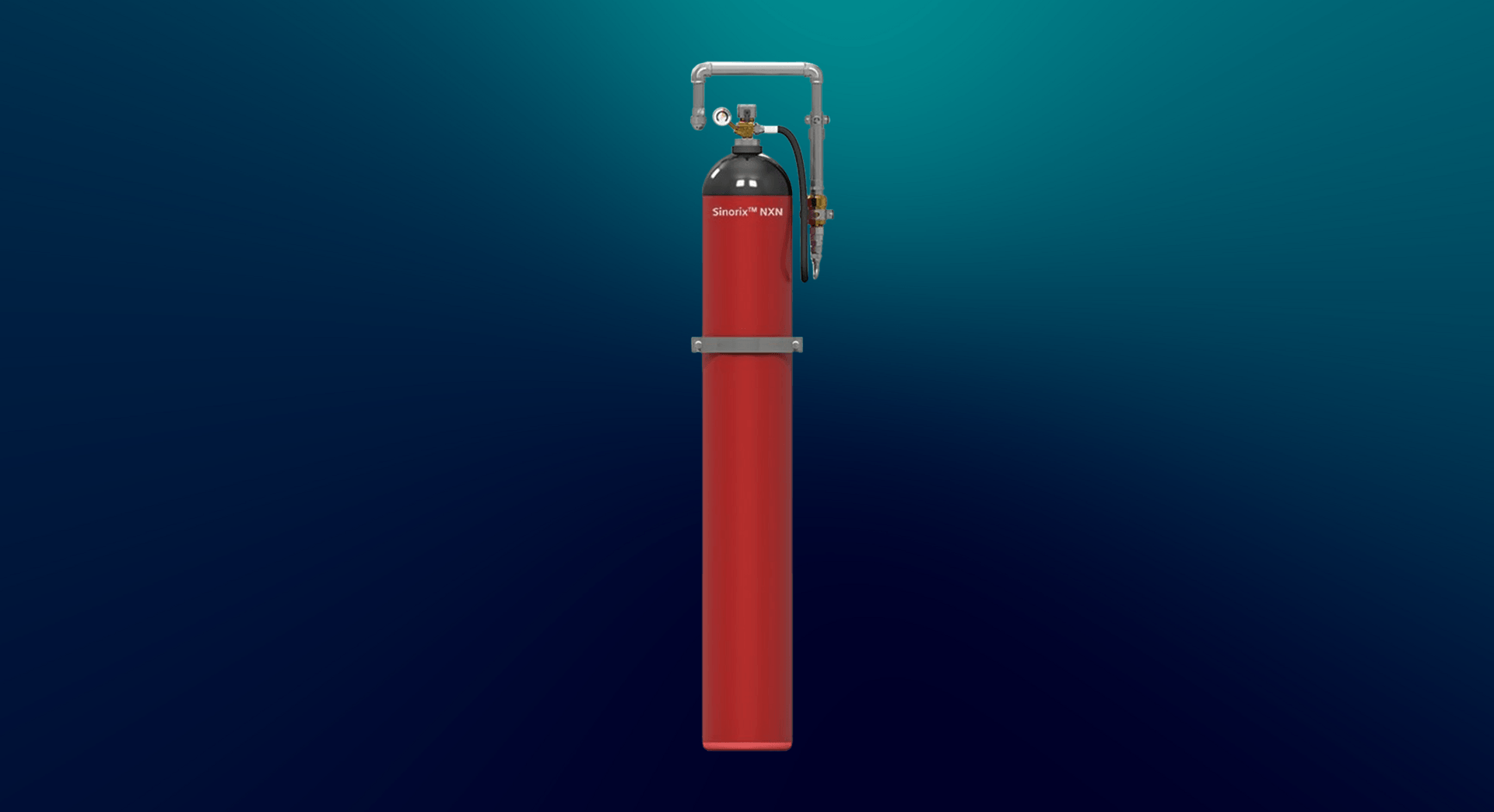
Sinorix NXN N2
Nitrogen suppression validated across every Li-ion cell chemistry
Sinorix NXN uses nitrogen — not a chemical agent — to flood the protected space and starve the fire of oxygen. No residue, environmentally inert, no equipment damage on discharge. Siemens’ published test program demonstrates Sinorix NXN N2 stops the cascading effect of thermal runaway across all three major battery cell formats.
- Cylindrical cells (e.g. 18650 / 21700 format): stops cell-to-cell propagation.
- Prismatic cells: stops cell-to-cell propagation.
- Pouch cells: stops module-to-module propagation.
- UL and ULC approved — Sinorix NXN N2 carries North American listings, alongside VdS approval no. S 619002 for the combined FDA241 + Sinorix NXN system.
“Test results have shown that the Sinorix NXN N2 product is effective at stopping the cascading effect of thermal runaway for all battery types.” — Siemens 2023 lithium-ion white paper
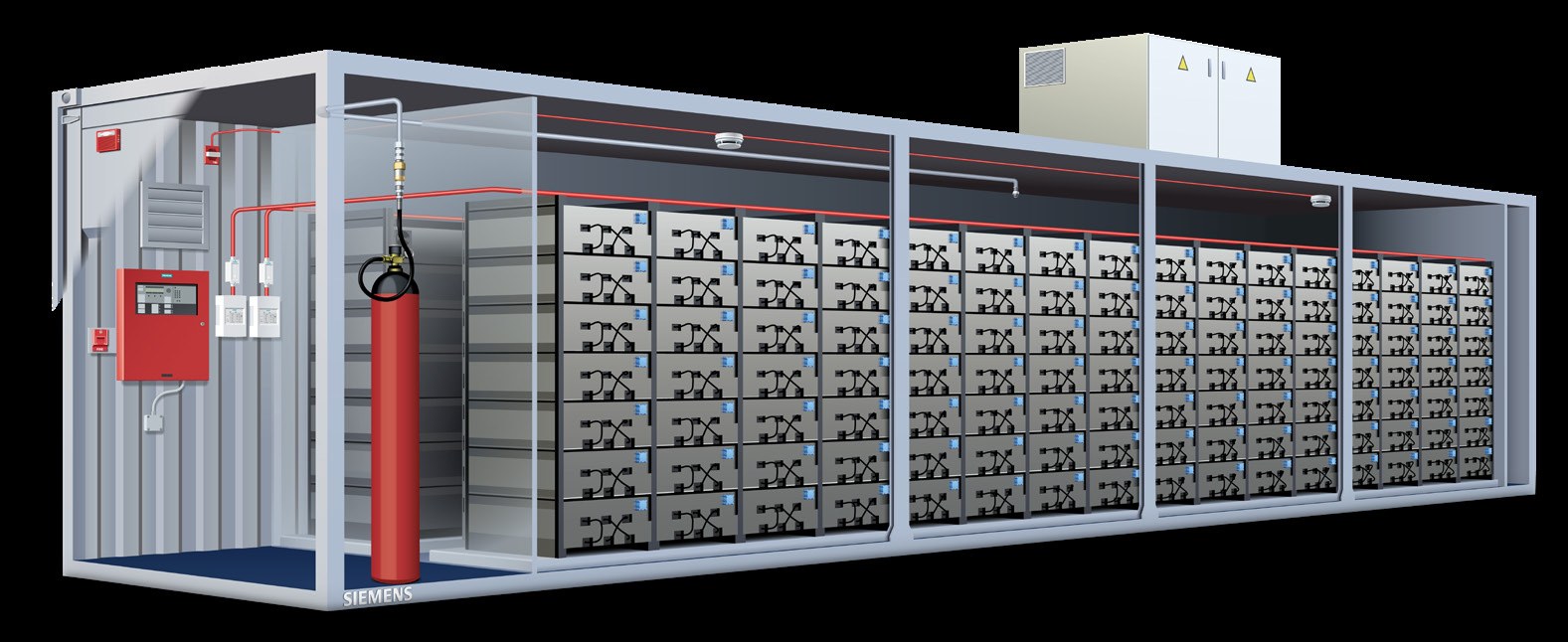
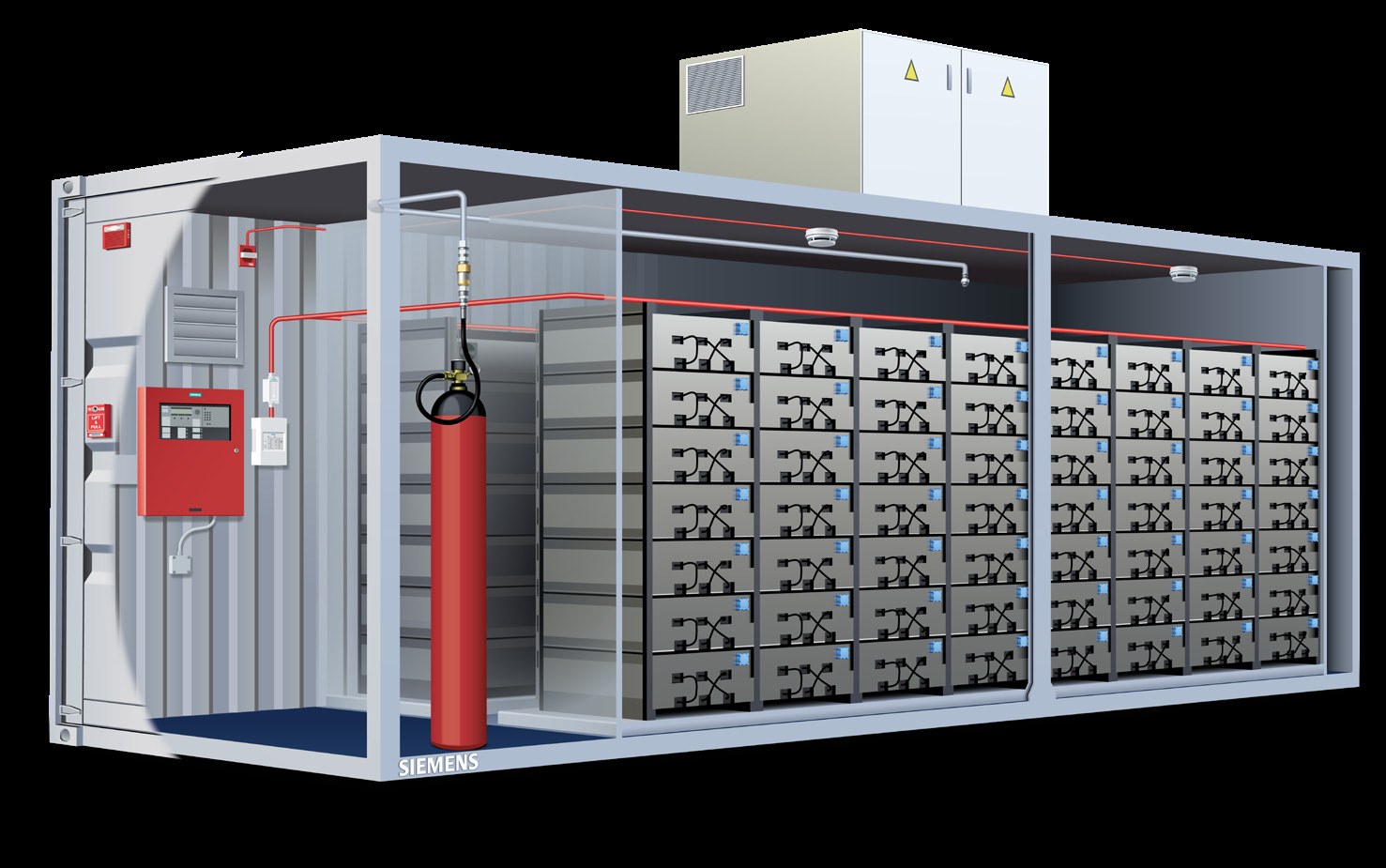
Lithium-ion battery energy storage systems (BESS), EV charging garages, data-centre UPS rooms, and battery manufacturing all carry a unique fire risk that standard fire protection was not designed for. As a Siemens Solution Partner, CAINtech installs the FDA241 aspirating off-gas detection plus Sinorix NXN nitrogen suppression — the combination Siemens designed specifically for lithium-ion hazards and which holds VdS approval no. S 619002.
5×
Faster detection vs. competitive
NFPA 855
Energy storage standard
VdS
Approved (no. S 619002)
32 min
Lead time before thermal runaway
Detection — FDA241
Suppression — Sinorix NXN
Lithium-ion thermal runaway is a different fire
Lithium-ion battery cells contain a high-energy electrochemical system with a flammable electrolyte and an internal oxidizer. When a cell is abused — mechanically, electrically, or by overheating — the result is not a simple fire but an exothermic chemical reaction called thermal runaway:
- Cascade between cells. Heat from one failing cell transfers to its neighbours, causing each to fail in turn. A 100-cell battery can fully ignite in minutes once the first cell goes.
- Off-gas releases before visible flame. A failing cell releases a vapour of electrolyte particles and combustion gases (hydrogen, methane, ethane, ethylene, CO, CO₂) before the fire is visible. By the time smoke is detected, the situation has already escalated.
- Self-feeding reaction. The cell contains its own oxidizer, so removing oxygen (the way clean-agent suppression works) does not stop the reaction inside the cell. The flame stops; the chemistry does not.
- Re-ignition risk. Cells can re-ignite hours or even days after a fire is “out,” because residual chemistry continues.
FDA241 detects smoldering at 145°C — 28 minutes before off-gas venting and 32 minutes before thermal runaway. This is the ideal precondition for triggering the e-stop, explosion prevention, and fire suppression.
Siemens, Li-ion Early Detection and Suppression Sales Presentation (2025)
Cell types and their failure profiles
| Cell type | Risk profile | Sinorix NXN test result |
|---|---|---|
| Cylindric | Lowest fire risk — least shared surface area between cells; the most-tested format in our certification program (8 manufacturers, hundreds of tests). | Cell-to-cell thermal runaway propagation stopped every time. |
| Prismatic | Higher risk than cylindric — more shared surface and tighter cell packing. | Cell-to-cell thermal runaway propagation stopped every time in nitrogen-inert environment. |
| Pouch | Highest risk — high cell density with minimal physical separation. Cell-to-cell propagation is difficult to stop. | Module-to-module propagation stopped every time. Cell-to-cell within a single module cannot reliably be stopped for pouch cells. |
The Surprise, Arizona BESS explosion (2019)
On April 19, 2019, a battery energy storage facility in Surprise, Arizona experienced a thermal runaway event that cascaded across battery racks and led to a deflagration explosion when the container was opened. Four firefighters were seriously injured. One of them was thrown 75 feet by the blast.
The facility was equipped with what the industry then considered best-in-class fire protection:
- A Vesda aspirating smoke detector
- A Novec 1230 clean-agent suppression system
- An e-stop procedure
All three operated as designed. The problem was the technology, not the implementation:
- The Vesda detector triggered only 18 seconds before the temperature peak — not nearly enough lead time to halt thermal runaway
- The Novec 1230 agent discharged 12 seconds AFTER the temperature had already peaked
- Thermal runaway continued to cascade from battery to battery even after the suppression system had emptied its agent
- Flammable off-gases accumulated unchecked until the building was opened by responders — producing the deflagration
When simulating a total flooding system approach, Novec 1230 did not deliver sufficient cooling to prevent propagation of thermal runaway or to prevent thermal exposure to combustible construction materials.
UL 9540A Installation Level Research Tests — Safety Considerations for Outdoor Containerized Li-Ion ESS (April 2021)
The Arizona incident drove the writing of NFPA 855 (Standard for the Installation of Stationary Energy Storage Systems) and the wider adoption of lithium-ion-specific detection and suppression. The FDA241 + Sinorix NXN combination CAINtech installs is the Siemens response to exactly this failure mode.
Why standard fire protection misses lithium-ion fires
Novec 1230 and other clean agents
Clean-agent suppression cools fires by decomposing on hot surfaces. With lithium-ion fires, the problem is that battery surfaces stay very hot for a very long time — long enough that the clean agent continuously decomposes, producing toxic hydrofluorocarbons. Eventually the agent concentration drops below effective levels (and Novec 1230 is heavier than air, so it migrates down and away from the rack tops). When oxygen re-enters the room — usually when first responders open the door — the residual heat plus accumulated explosive gases produces an explosion.
Water sprinklers
Water sprinkler systems were specifically tested by UL against lithium-ion thermal runaway. The UL verdict: “Limited effectiveness to prevent cascading thermal runaway.” Water can help cool an established fire and is often used as a tertiary protection, but it cannot prevent the cascade between cells once it has begun.
Why nitrogen is the right answer
Sinorix NXN floods the protected space with nitrogen, dropping ambient oxygen below the combustion threshold before thermal runaway can propagate. In a nitrogen-rich environment, a cell undergoing thermal runaway experiences a contained “torch effect” — the cell burns out its own internal combustibles in a controlled setting without spreading to other cells or modules. Nitrogen does not decompose, does not produce toxic byproducts, does not damage assets, and requires no cleanup. After discharge the room can be safely purged after a holding period.
Where lithium-ion fire protection applies
CAINtech installs the FDA241 + Sinorix NXN solution in three application classes:
BESS facilities
Battery energy storage at solar and wind generation sites; commercial-scale grid stabilization; load-balancing storage.
UPS rooms
Lithium-ion UPS in data centres, telecommunications facilities, hospitals, clean rooms, and other facilities where continuity is critical.
Demand management
Industrial plants, distribution centres, transportation facilities, metro stations, and battery manufacturing/storage warehouses.
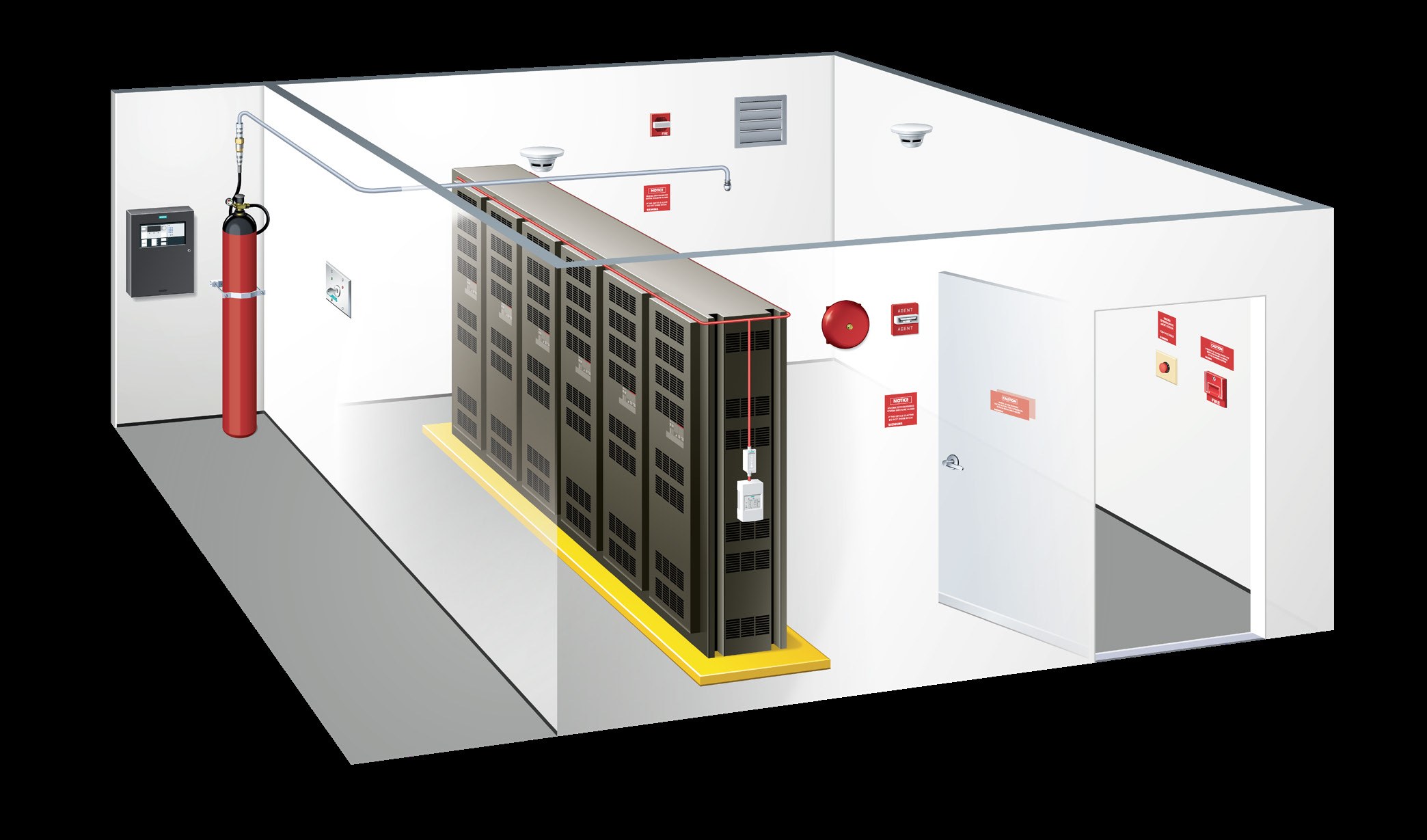
Inside a protected UPS room
For data-centre UPS rooms, telecommunications facilities, and clean rooms, the protected envelope is a sealed room rather than a containerized BESS unit. The Siemens design uses FDA241 aspirating detectors mounted at strategic sampling points, Sinorix NXN cylinders sized to the room volume, and Cerberus PRO panel integration that interfaces with the building’s main fire alarm system. The room receives an e-stop signal at very early off-gas detection — before the cells have moved into thermal runaway.
Why CAINtech
The Siemens Solution Partner for lithium-ion in Ontario
Frequently asked questions
What is thermal runaway and why is it dangerous?+
Why don’t standard fire protection systems work for lithium-ion?+
What is NFPA 855 and does it apply to my building?+
Does my BESS / EV parking garage / battery storage room need this protection?+
What is VdS approval and how does it map to NFPA 855?+
How is FDA241 different from Vesda or other aspirating smoke detection?+
What happens after Sinorix NXN discharges?+
Does it work for pouch cells / prismatic / cylindric cells?+
How does the system integrate with the building’s main fire alarm panel?+
What does the engineering and quote process look like?+

Lithium-ion fire protection assessment
Send us the building scope — BESS, EV parking, UPS room, or battery storage facility. We do a site walk and follow up with a sized solution and quote. Mon to Fri, 7:00 AM to 3:30 PM.